
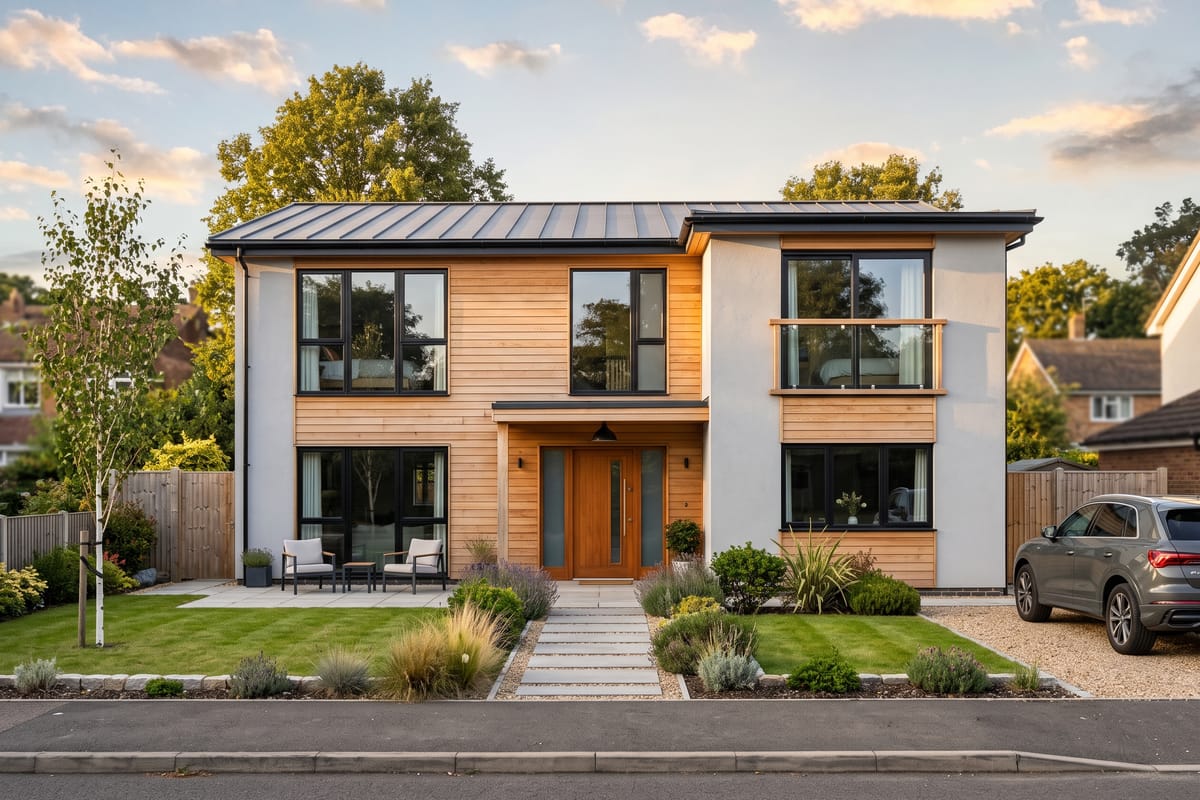
An exterior repaint costs thousands, involves scaffolding, and greets you from the street every day for the next decade. It is also chosen from the same little sample cards as a bedroom wall — which is how streets end up with that one house where the gray came out lavender.
Photograph the house like a listing
Straight-on from across the street, the whole facade in frame with some ground and sky, in overcast light or soft morning sun. Harsh midday shadows carve the facade into stripes the render has to fight — the same rule as interiors: even light, no flash, and the geometry takes care of itself.
Change one thing at a time
Render the siding or render color first, alone. Then the front door. Then trim, then landscaping. Exterior elements read against each other — a door color that sings against white render dies against greige — so sequencing the renders tells you which change is doing the work, and often that the door and the landscaping were the whole upgrade.
The front door deserves special attention: it is the cheapest change on the facade with the most disproportionate effect, and the one place where a bold color is low-risk. It gets its own tool for exactly that reason.
Painted brick is a one-way door
Once brick is painted, unpainting it is somewhere between expensive and impossible. This is precisely the decision renders exist for: paint the house in a picture, live with that picture for a week, and let the certainty (or the doubt) accumulate before anyone opens a can.
Getting the household — or the HOA — to yes
Abstract color arguments run forever; a photoreal render of the actual house ends them. The same picture works on an HOA board, with one caveat: check the approved palette before falling in love with anything outside it.