
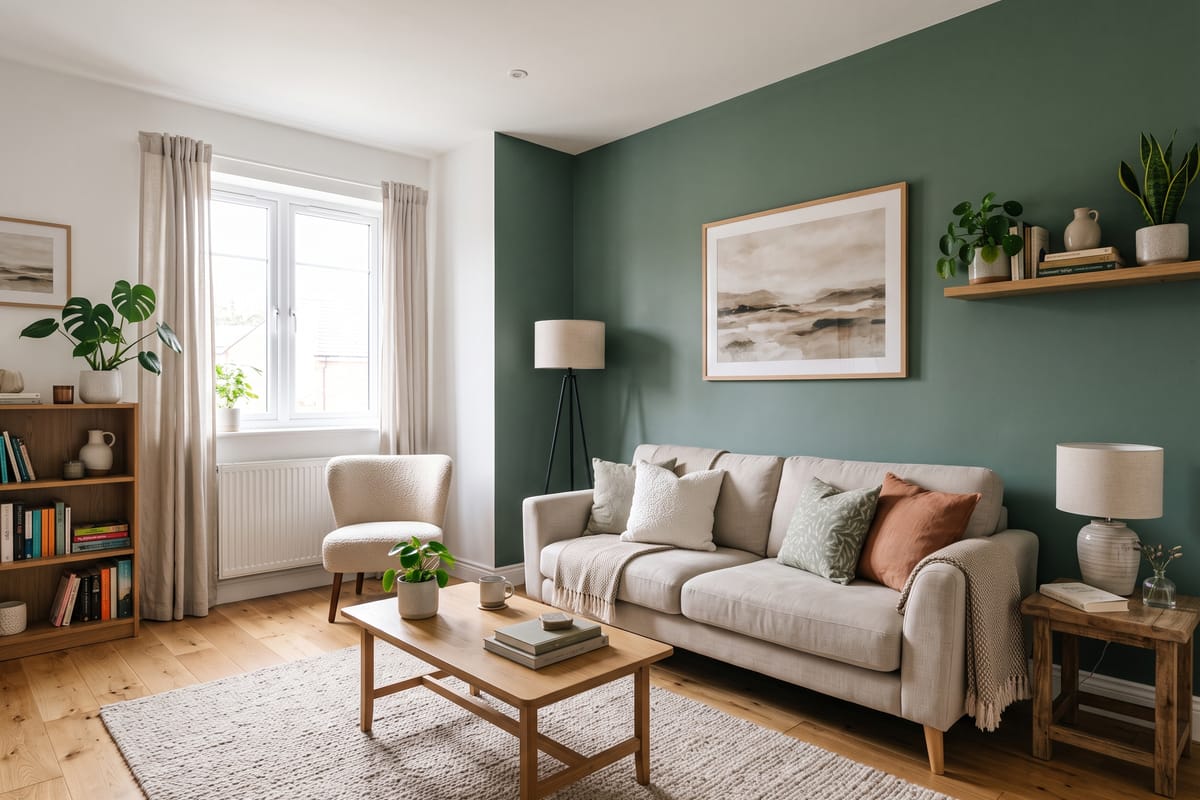
Everyone has repainted a room twice: once in the color from the chip, once in the color they actually wanted. The chip isn't wrong, exactly — it is just a five-centimeter sample of something you are about to apply to ten square meters, viewed under retail lighting you will never have at home.
Three ways the chip misleads you
- Scale: color intensifies as the area grows. A pleasant sage on a chip reads as a much stronger green across a whole wall.
- Light: a north-facing room cools every color down; a south-facing one warms it up; your evening bulbs shift it again.
- Sheen: the same pigment in matte, eggshell and satin reflects differently and reads as three different colors.
Render the shortlist on your actual walls
Upload a photo of the room and describe the color — a known name like sage or olive, or plainly in words: 'warm off-white with no yellow in it'. The render applies it to your walls, with your furniture in front of it and your window light on it. A finish is part of the request too: limewash and plaster read very differently from a flat roller coat.
Twenty seconds per option means the shortlist of six becomes a shortlist of two in a coffee break, without a single pot opened.
Then still buy one sample pot
The render settles which colors are wrong for the room; the sample pot confirms the winner is right. Paint a patch on two walls — one that gets direct light and one in shadow — and look at both in the morning and again under your bulbs at night. One pot, not six, is the point.
Going dark? Pick the wall deliberately
If one accent wall is the plan, mask just that wall in the workspace and leave the rest alone. A dark color usually sits best on the wall the window is in — the backlight means you never see it in full shadow — or behind the sofa or bed, where it anchors furniture instead of shrinking the room.