
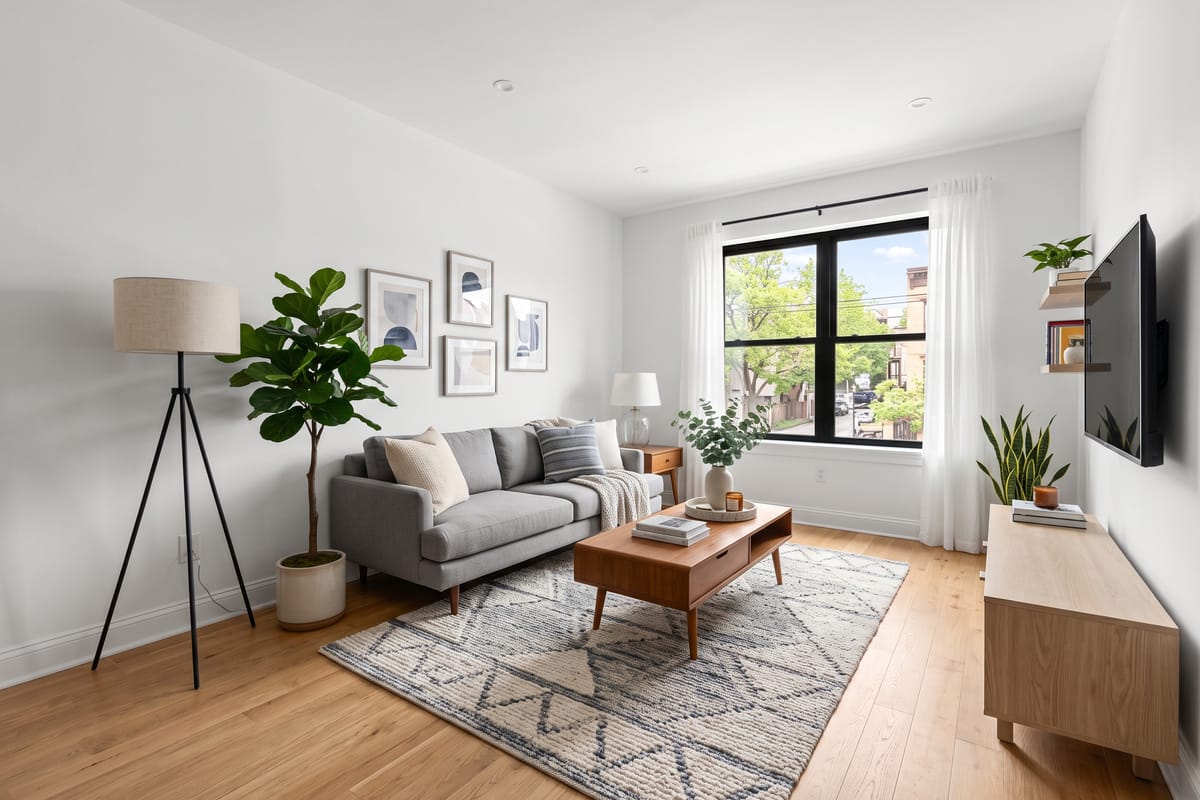
Empty rooms photograph small and cold, and buyers decide in the first scroll. Staging fixes that. The question is only which kind, and the economics have moved a lot in two years.
Physical staging
Furniture rental plus two moving days: typically $1,500–4,000 per month for a mid-size home, more in expensive markets, billed until the listing closes. Its one real advantage survives: buyers experience the furniture at the viewing.
Manual virtual staging
A designer places 3D furniture into your photo by hand: $16–40 per image, one to three days turnaround, one style per order. Good quality, but you stage three hero shots and leave the rest empty because every photo costs.
AI staging
Upload the empty room, pick a style, get a photorealistic staged photo in about thirty seconds for a fraction of a dollar. That changes how you use it: stage every room of the listing, compare three styles per room, refresh the look when the listing goes stale, and export a vertical walkthrough clip for Reels.
NovaVerto adds one thing manual staging can't: every piece placed is matched to a real product with a live price, so the 'get this look' number under the render is real, and a buyer who loves the sofa can actually buy it.
- Disclose virtual staging in the listing — it is standard practice and, in several markets, required.
- Keep an unstaged photo of each room in the gallery so viewers aren't surprised.
- Product matches link to real US stores, the biggest furniture retailers first, priced in US dollars — so everything in the staged photo can actually be bought.
The honest split
Vacant, mid-priced or rental listings: AI staging, every room, same day. Luxury listings where viewings are the sale: physical staging for the hero rooms, AI for the rest of the gallery and for the pre-listing teaser.